

In today’s competitive landscape, small and medium-sized businesses (SMBs) are leveraging advanced technologies to enhance their operational efficiency. This article explores how virtualization, colocation, and Managed Service Providers (MSPs) offer solutions that cater to the unique needs of SMBs, enabling them to reduce costs, optimize resources, and focus on growth. Understanding Virtualization and Its Benefits Virtualization is a revolutionary technology that allows businesses to create simulated versions of hardware and software resources. It fundamentally alters the way enterprises manage their IT environments, enabling them to optimize their infrastructure for maximum efficiency. For small and medium-sized businesses (SMBs), understanding virtualization and its diverse components is paramount to leveraging its benefits effectively. At its core, virtualization refers to the creation of virtual versions of physical resources, such as servers, storage devices, and networking components. This decoupling of hardware from software allows businesses to run multiple instances of applications on a single server, which contributes significantly to resource optimization. Various types of virtualization exist, each catering to different operational needs. **Server virtualization** stands as the most prevalent form, where a physical server is partitioned into multiple virtual servers, each capable of running its own operating system and applications. This not only maximizes server utilization but also simplifies server management and reduces hardware costs. By using hypervisors—a software layer that allows for the creation and management of virtual machines (VMs)—companies can allocate hardware resources dynamically based on demand. **Desktop virtualization** enables users to run desktop environments from a centralized server, as opposed to local devices. This approach provides flexibility and enhances security, as all data is stored centrally, making it easier to manage updates, backups, and security protocols. Employees can access their virtual desktops from any device, fostering a mobile workforce that can operate from virtually anywhere. This responsiveness is particularly valuable for SMBs aiming to maintain agility in an ever-changing business landscape. **Operating-system-level virtualization** employs a different method, allowing multiple isolated user-space instances within a single operating system kernel. This type offers a lightweight alternative to traditional virtualization, minimizing overhead and enhancing performance. Technologies such as containers exemplify this approach, enabling developers to package applications with their dependencies, promoting consistency across various deployment environments. The advantages of virtualization extend beyond mere resource allocation. **Cost savings** are among the most significant benefits—by consolidating multiple workloads onto fewer physical machines, businesses can significantly reduce their expenses related to hardware acquisition, power consumption, cooling, and maintenance. For SMBs constrained by budgetary limitations, this reduction in capital expenditures opens avenues for investment in other crucial business areas, such as marketing and talent acquisition. **Improved scalability** is another compelling reason for SMBs to embrace virtualization. Unlike traditional environments that require physical infrastructure scaling, virtualization allows businesses to provision resources on-demand. This means that as demand fluctuates—whether due to seasonal trends or unexpected growth—companies can scale their resources up or down seamlessly. This degree of agility is invaluable for SMBs looking to adapt swiftly to marketplace changes. Furthermore, organizations experience **better resource utilization** through virtualization. In typical scenarios, physical servers may run at a fraction of their capacity, leading to inefficiency. Virtualization effectively mitigates this waste by allowing multiple virtual servers to run on a single physical server, thereby ensuring that hardware is used to its fullest potential. This optimization not only contributes to cost efficiency but also enhances performance, as systems can be fine-tuned to meet specific workload needs. Another vital aspect is the **resilience** that virtualization provides to SMBs. The technology inherently supports disaster recovery and business continuity strategies. Virtual environments can be replicated and backed up with relative ease, allowing for rapid recovery should a failure occur. For SMBs, this means minimal disruption during unforeseen events, maintaining continuity and trust with customers. Lastly, the integration of virtualization with other technologies amplifies its effectiveness. For instance, when combined with cloud solutions, SMBs can enjoy hybrid environments that provide the best of both worlds: the control and security of on-premise resources alongside the cost-effectiveness and scalability of cloud services. This synergy enables SMBs to tailor their IT strategies dynamically, ensuring that they remain competitive in an increasingly digital economy. In summary, virtualization offers a multitude of benefits that empower SMBs to enhance their IT infrastructure without necessitating substantial financial investments. By embracing server, desktop, and operating-system-level virtualization, businesses can achieve considerable cost savings, scalability, resource efficiency, and resilience. As the demands of the marketplace escalate, those who leverage virtualization effectively will undoubtedly position themselves for sustained growth and success, enabling them to focus on their core business objectives while maintaining a robust IT framework. The journey towards virtualization marks a transformative step for SMBs in their quest for maximizing efficiency. The Role of Colocation in Business Strategy Colocation centers play a crucial role by providing the physical infrastructure needed for businesses to house their servers and networking equipment. Colocation service providers offer a compelling solution for small and medium-sized businesses (SMBs) seeking to optimize their IT strategies. In essence, colocation involves renting space in a facility specifically designed to store servers and related hardware. This differs fundamentally from standard data centers, which typically use a single organization’s equipment, limiting scalability and flexibility. Colocation centers provide several services that significantly enhance operational efficiency for SMBs. These services often include robust power solutions, high-speed internet connectivity, physical security measures, fire suppression systems, environmental controls, and redundancy capabilities. Unlike standard data centers, colocation facilities boast multiple layers of security, including biometric access controls, surveillance cameras, and on-site security personnel. This ensures that both the physical and data security needs of businesses are adequately addressed. One of the strategic advantages of colocation for SMBs is the substantial cost savings associated with power and cooling. The energy demands of hosting servers can quickly escalate when housed in an on-premise facility, especially for smaller organizations that may lack the infrastructure for efficient energy consumption. Colocation centers are typically designed with energy efficiency in mind, utilizing advanced cooling techniques and renewable energy sources, thus mitigating operational costs. By using a colocation service, SMBs can
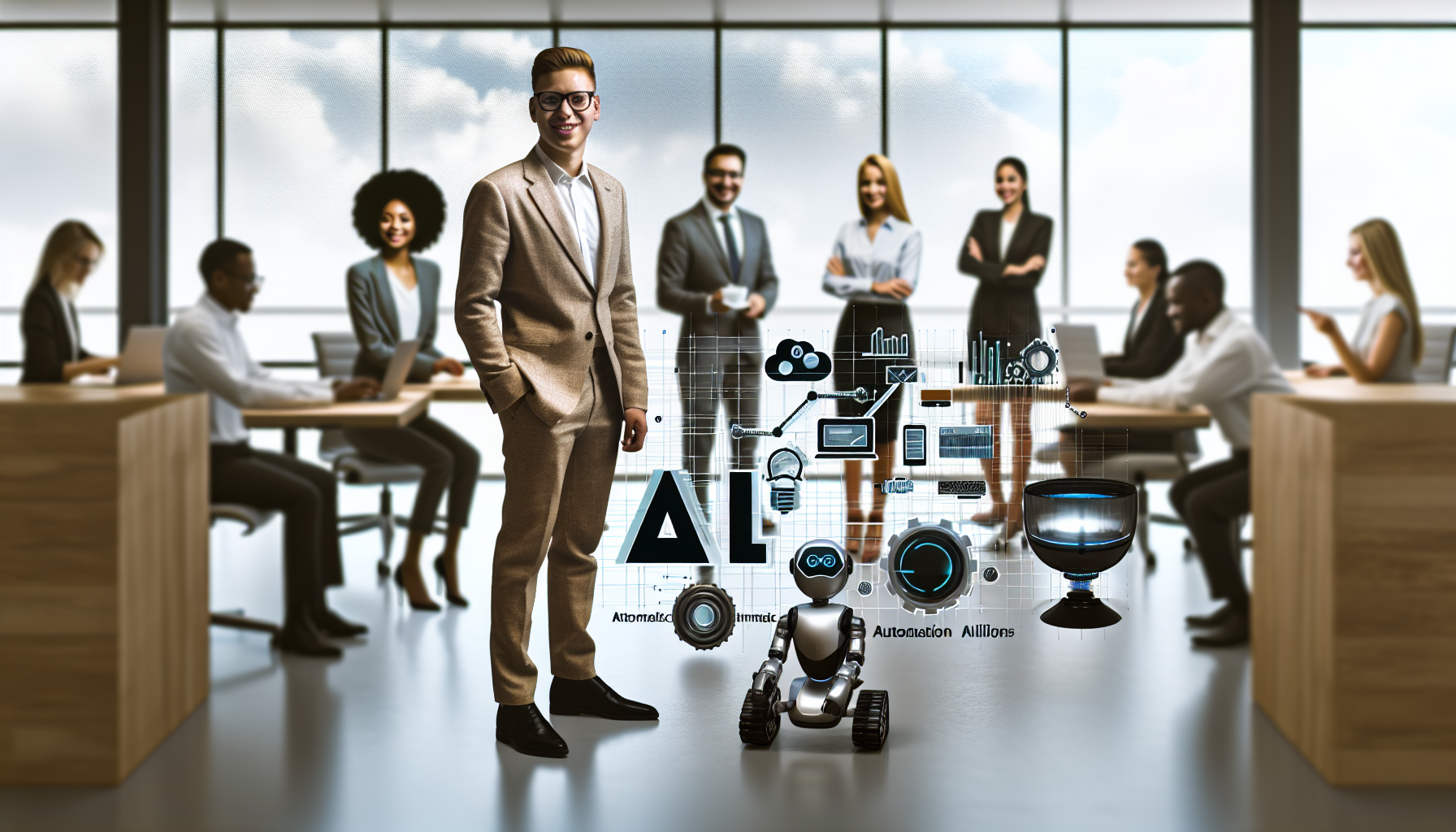
Harnessing AI and Automation for Small and Medium Business Growth
In today’s fast-paced business environment, small and medium-sized enterprises (SMBs) face unique challenges and opportunities. This article explores how artificial intelligence (AI) and automation can empower SMBs to streamline operations, enhance customer experiences, and drive growth. By embracing these technologies, new businesses can position themselves for success and innovation. Understanding AI and Automation Understanding AI and Automation Artificial Intelligence (AI) and automation are pivotal components in the modern business landscape, especially for small and medium-sized businesses (SMBs). At its core, AI refers to the simulation of human intelligence processes by machines, particularly computer systems. This encompasses a variety of capabilities such as learning, reasoning, problem-solving, perception, and language understanding. Automation, on the other hand, is the use of technology to perform tasks with minimal human intervention. It streamlines processes and enhances operational efficiency by allowing systems and machines to handle repetitive tasks, thus freeing human resources for more strategic activities. AI functions by mimicking cognitive functions associated with the human mind. This involves sophisticated algorithms designed to recognize patterns, make predictions, and learn from data inputs over time. For example, machine learning, a subset of AI, enables systems to improve their performance based on past experiences without being explicitly programmed for every scenario. By crunching vast amounts of data, AI can help businesses make informed decisions, optimize processes, and enhance customer experiences. Automation complements AI by addressing the operational side of business functions. It allows for the execution of repetitive tasks with increased precision and speed, significantly reducing the opportunity for human error. For instance, automated workflows can handle batch processing of invoices, schedule social media posts, or manage inventory levels, all of which improve productivity and reduce costs. The integration of AI into automation systems leads to an advanced synergy, where AI algorithms can take over more complex tasks, continuously adapting and optimizing processes based on real-time data and external variables. The combination of AI and automation produces significant efficiencies across various business functions. Consider a customer service scenario: traditional customer support often involves answering repetitive queries, which can be time-consuming for human operators. AI-powered chatbots, seen increasingly in many SMBs, can autonomously manage these inquiries, providing immediate responses and freeing up human agents to handle more complex issues. This not only increases response times and customer satisfaction but also allows companies to optimize their workforce allocation. The future of AI and automation in the business landscape is brimming with potential. With advancements in technology, we can expect greater sophistication in how these tools evolve. AI will increasingly lead to more advanced decision-making capabilities, while automation will shift from merely executing tasks to making informed choices based on data analysis. The integration of Internet of Things (IoT) devices, predictive analytics, and real-time data processing will enhance this transformation, enabling organizations to react quickly to market changes and customer demands. Moreover, the adoption of AI and automation tools is becoming increasingly accessible for SMBs, driven by cloud-based services and scalable solutions. Tools that were once reserved for large enterprises are now readily available, enabling smaller companies to harness technology in ways that were previously unimaginable. These innovations level the playing field, allowing SMBs to compete with larger corporations and helping to secure their place in the evolving business environment. In summary, understanding AI’s capabilities and the principles of automation is essential for SMBs aiming to leverage technology effectively. These tools do not merely serve as operational enhancements but are crucial for driving strategic growth and innovation. As businesses continue to navigate the complexities of a digital marketplace, AI and automation will be instrumental in shaping their paths forward, enabling them to thrive despite challenges and seize new opportunities with agility and foresight. The Role of AI and Automation in SMBs Small and medium-sized businesses (SMBs) are increasingly turning to AI and automation to navigate a competitive landscape where efficiency and enhanced customer experiences are paramount. By harnessing these technologies, SMBs can streamline operations, reduce costs, and elevate their customer service strategies, leading to sustainable business growth. The integration of AI and automation not only optimizes internal processes but also positions SMBs to respond proactively to market demands. One of the most compelling applications of AI in SMBs is the use of chatbots for customer service. These AI-driven conversational agents can handle a plethora of queries, from simple FAQs to more complex support issues, operating 24/7 without the need for human intervention. Businesses such as Sephora and H&M have successfully deployed chatbots on their websites and social media platforms, allowing customers to receive immediate assistance. Not only do chatbots reduce wait times, but they also free up human resources for more intricate tasks, ultimately improving customer satisfaction and loyalty. Customer Relationship Management (CRM) solutions exemplify another vital area where AI and automation can revolutionize SMB operations. Tools like Salesforce and HubSpot leverage AI capabilities to analyze customer data, predict behavior, and facilitate personalized marketing efforts. By automating the collection and analysis of customer interactions, these CRM systems allow businesses to tailor their offerings to meet individual customer needs efficiently. For instance, an SMB in the retail sector can use AI-powered insights to adjust inventory levels based on predictive analytics, ensuring that popular items are always in stock while minimizing excess inventory that can lead to additional costs. Data analytics play a crucial role as well, with platforms like Google Analytics and Tableau enabling SMBs to gain in-depth insights from their operations and marketplace. By automating data collection and employing AI algorithms to analyze trends, businesses can stay informed about customer preferences, market dynamics, and operational efficiencies. A restaurant, for example, could utilize these tools to analyze data related to peak dining hours, most popular menu items, and customer feedback. Automated reports can provide actionable insights that drive decision-making, such as menu adjustments or targeted marketing campaigns during high traffic periods. The use of AI and automation not only streamlines routine tasks but also allows SMBs to focus on strategic initiatives that propel growth. Tools like project management software, including Trello